
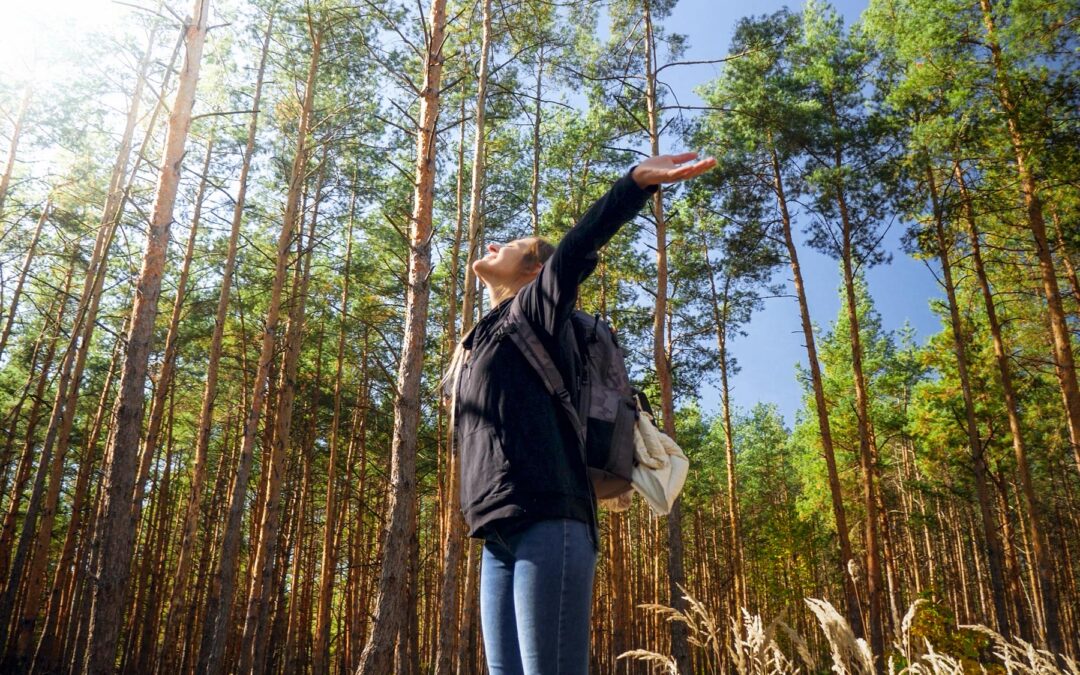
Forest Bathing and Its Role in Addiction Treatment
What Shinrin-Yoku (Forest Bathing) Really Means—and What It’s Not
Shinrin-Yoku (pronounced sheen-rin yo-koo) is a Japanese practice that translates to “forest bathing.” And no, it doesn’t mean you’re literally bathing in a river.
It means immersing yourself in a natural setting with your senses turned on. You move slowly. You notice what you hear, see, smell, and feel. You let your nervous system settle, one small moment at a time.
A few quick clarifiers, because forest bathing gets misunderstood a lot:
- It’s not hiking for fitness. You can absolutely do Shinrin-Yoku on a flat, short trail, or even in a small patch of woods. The goal is presence, not mileage.
- It’s not “woo.” You don’t have to believe anything spiritual for this to help. It’s a practical, body-based way to downshift stress.
- It’s not a replacement for clinical care. Forest bathing can be supportive, but it’s not detox, therapy, medication management, or a full substance use treatment plan.
When people talk about forest bathing therapy, they’re usually talking about using Shinrin-Yoku intentionally as a therapeutic practice. It can complement evidence-based addiction treatment by supporting something many people in early recovery desperately need: nervous system regulation.
Because early recovery is not just about “willpower.” It’s often a body problem as much as a mind problem. Stress hormones run high. Sleep gets weird. Emotions spike. The smallest trigger can feel huge. Nature, approached mindfully, can become one way to practice steadiness while your brain and body heal.
Why Nature Helps in Recovery: The Science Behind Forest Bathing Therapy
When you’re under chronic stress, your body tends to live in “fight-or-flight.” That state can be useful in a true emergency, but it’s brutal when it becomes your baseline.
Time in nature, especially when you slow down and engage your senses, is associated with shifts toward the “rest-and-digest” side of the nervous system. In plain language: your system gets a chance to exhale.
Research on Shinrin-Yoku and nature exposure has linked forest environments with measurable changes, such as:
- Heart rate regulation
- Blood pressure regulation
- Lower stress hormone activity (like cortisol), in some studies
Why does that matter for addiction treatment? Because dysregulation is a relapse risk. When your body feels keyed up, it’s easier to fall into:
- craving loops (“I need something to take the edge off”)
- impulsive decisions
- emotional flooding
- sleep disruption that makes everything harder the next day
There’s also interesting research exploring how forest environments may support aspects of immune system function, including natural killer (NK) cell activity in some studies. This is not a promise that a walk in the woods will “boost your immunity” in a dramatic way, but it does support a broader point: your body responds differently to a forest than it does to constant indoor stress.
On the emotional side, forest bathing is often associated with improvements in:
- mood and irritability
- anxiety symptoms and stress tolerance
- attention and mental fatigue
- sleep quality, especially when it becomes a routine
If we’re being honest about the research, the strongest evidence is around stress reduction and anxiety-related symptoms. The evidence directly measuring substance use outcomes is still emerging. But in addiction recovery, reducing stress reactivity and improving coping capacity is not a side benefit. It’s a big deal.
Forest Bathing Therapy for Anxiety (and Why That Matters for Addiction Treatment)
Anxiety and addiction often feed each other.
Sometimes anxiety comes first, and substances become a fast way to numb it. Other times, substance use (and especially withdrawal and early sobriety) amplifies anxiety, restlessness, and panic-like sensations. Either way, it can become a loop:
- Feel anxious or dysregulated
- Crave relief
- Use (or obsess about using)
- Feel shame, consequences, or rebound anxiety
- Get more anxious
Forest bathing therapy for anxiety works less by “talking you out of anxiety” and more by changing your physiological state through slow, sensory grounding.
In practice, it often looks like:
- moving at a gentler pace than you’re used to
- orienting to safety (wide trail, comfortable spacing, permission to pause)
- noticing simple sensory inputs (wind on skin, bird calls, leaf color)
- letting your attention land in the present instead of in the spiral
This is especially relevant in treatment because many therapy goals require the same building blocks Shinrin-Yoku strengthens:
- Reduced rumination: giving your mind something neutral and real to focus on
- Increased distress tolerance: practicing “I can feel this and stay here”
- Improved interoception (body awareness): noticing early cues like tight chest, shallow breathing, clenched jaw, restless legs
That last one matters more than people realize. When you can catch the early body signals, you have more time to use coping skills before a craving or panic wave crests. This is where forest bathing therapy can play a crucial role in addressing these issues effectively.
How Forest Bathing Supports Addiction Recovery Day-to-Day
It’s easy to talk about “nervous system regulation” in a general way. Let’s translate it into what people actually deal with on a random Tuesday in recovery.
Forest bathing can support day-to-day recovery realities like:
- Cravings that come out of nowhere: a sensory reset can interrupt the mental loop
- Irritability and emotional hair-trigger moments: nature slows the pace and lowers overload
- Restlessness in early sobriety: gentle movement plus attention anchoring can help
- Sleep disruption: especially when forest time happens earlier in the day and becomes a routine
- Burnout: recovery is work, and your system needs real recovery time too
One especially useful concept in relapse prevention is urge surfing, which means noticing a craving like a wave: it rises, peaks, and falls. You don’t have to fight it. You ride it.
Forest bathing supports urge surfing because sensory engagement gives you something concrete to do while the wave passes:
- feel your feet on the ground
- name five shades of green
- track one sound until it fades
- notice your breath moving in and out
This also connects to identity change. Recovery isn’t just stopping a behavior. It’s becoming a person who lives differently. Nature has a quiet way of offering self-compassion. In the woods, you are not your worst day. You’re a human nervous system learning how to settle.
And if you do forest bathing with others, there’s another protective factor: belonging. Social connections through forest bathing can be a gentle way to rebuild community, especially for people who feel awkward in early recovery or burned by past relationships. You don’t have to make constant eye contact. You can walk side by side. You can share quiet.
What a Forest Bathing Session Looks Like (So It’s Not Intimidating)
A lot of people hear “forest bathing” and picture an intense hike, awkward silence, or something overly ceremonial. In reality, a typical guided session is simple and adaptable.
A common flow looks like this:
- Arrival and intentions
- A quick welcome, a reminder that you can always opt out, and an invitation to set a gentle intention (like “slow down” or “be curious”).
- Slow walk
- Not power-walking. More like wandering with pauses.
- Sensory invitations
- The guide offers prompts to help you engage your senses.
- Sit-spot
- Sitting or standing in one place for a few minutes to notice what you usually miss.
- Tea and closing circle
- Often, a simple tea ritual (not required) and a chance to reflect on what you noticed.
If you’re doing this on your own, you can borrow prompts like:
- Sound map: close your eyes for 60 seconds and point to each sound you hear
- Texture practice: notice three different textures (bark, rock, leaf, air)
- Color scan: find five shades of one color
- Breath with trees: match your exhale to the sway of branches, slow and easy
Accessibility matters here. Forest bathing is meant to be gentle and can be adapted for different mobility needs. You can do it:
- on flat trails
- on benches or picnic areas
- for 10 minutes instead of 2 hours
Trauma-informed considerations are also important. A good session emphasizes choice, consent, and boundaries. No one should be pushed into closing their eyes, sharing personal details, wandering off alone, or sitting in a spot that doesn’t feel safe.
Solo practice can be wonderful, but guided nature therapy sessions can be especially helpful if you:
- feel stuck in your head and want structure
- get anxious in quiet
- want the safety of a group container
- benefit from skilled pacing and reflection
Guided Forest Therapy: What to Look For in a Program or Practitioner
If you’re considering a guided forest therapy experience, training matters. Not because forest bathing has to be rigid, but because groups, trauma histories, and recovery needs require skill.
A well-trained guide is more likely to be:
- trauma-informed (choice-based language, no forcing, respectful pacing)
- skilled at group facilitation (keeping it safe, not awkward or chaotic)
- prepared for basic outdoor safety (weather shifts, route planning, contingency plans)
- ethical about scope (not pretending nature is a cure-all)
One credible training organization is the Association of Nature and Forest Therapy, which sets standards for what a “Certified Forest Therapy Guide” typically implies.
In recovery settings, it can be especially helpful when leadership blends credentials, for example, someone is a Licensed Therapist and Certified Forest Therapy Guide. That combination can matter because it brings both clinical understanding and nature-based practice together in a grounded way.
Here’s a quick checklist you can use when evaluating a program:
- Do they do any risk screening (medical concerns, recent relapse, mobility needs)?
- Are boundaries clear (time, location, confidentiality expectations, sharing is optional)?
- Do they have a weather plan and cancellation policy?
- Is the pace explicitly gentle and adaptable?
- Is there integration time (reflection prompts, closing, ways to bring insights home)?
Seasonal Forest Bathing: Why the Time of Year Changes the Experience (and Benefits)
One of the underrated gifts of Shinrin-Yoku is that it changes with the seasons, and that can mirror recovery in a really supportive way.
Seasonal forest bathing events might look like:
- Spring: sensory “awakening,” noticing new growth, gentle re-entry after a hard season
- Summer: grounding, steadiness, building capacity and routine
- Fall: transition, letting go, grief work, identity shifts
- Winter: stillness, resilience, patience, learning to tolerate discomfort without escaping
Recovery has seasons, too. Early recovery often focuses on stabilization: sleep, cravings, structure, safety. Later stages can include deeper growth: meaning-making, relationships, purpose, and grief that finally has room to surface.
For Vermont conditions around Burlington and Lake Champlain, a few practical tips make this much more doable:
- Dress in layers you can adjust as your body temperature changes
- Bring traction (microspikes) in icy months
- Hydrate even when it’s cold; thirst cues can be quieter
- Use sun protection and bug protection in warmer months
- Choose shorter routes when you’re stressed, tired, or early in recovery
- Let “10 minutes counts” be your rule, especially in winter
Local Nature Access and Inspiration: Protected Lands, Preserves, and Community Partnerships
You don’t need a pristine wilderness to do Shinrin-Yoku. You need a patch of nature you can access consistently and safely.
Here, near Burlington and Lake Champlain, you can find options by using a simple framework:
- Look up local land trusts and conservation organizations
- Explore state parks and town forests with quieter trails
- Search for guided walks or nature-based wellness events
- Ask about recovery-friendly groups that do outdoor meetups (gentle, welcoming, low-pressure)
A few safety and suitability notes, especially for folks in early recovery:
- Pick quiet trails where you won’t feel crowded or overstimulated
- Keep elevation gain low if fatigue or anxiety is high
- Consider cell coverage and let someone know where you’ll be
- Choose clear meeting points and daylight hours if you’re going with a group
How We Can Integrate Shinrin-Yoku into Treatment at River Rock (Without Replacing Clinical Care)
At River Rock Treatment, we’re a clinically driven outpatient substance use and mental health treatment center located on the eastern shoreline of scenic Lake Champlain in Burlington, VT.
We want to be very clear about this: Shinrin-Yoku can support recovery, but it does not replace clinical care. What it can do is strengthen the in-between moments, the hours and days when you’re not in session but you still need tools.
Here’s how forest bathing can complement outpatient care:
- reinforcing coping skills you’re already practicing in therapy
- supporting nervous system regulation between sessions
- encouraging healthy routines that make relapse less likely
- offering a non-shaming way to work with stress, cravings, and anxiety
Some realistic integration ideas include:
- Clinician-led grounding walks as a skills practice (not a fitness event)
- Optional referrals to guided forest therapy with qualified practitioners
- Structured reflection prompts you bring back into therapy (what you noticed, what shifted, what was hard)
- Pairing nature time with relapse-prevention planning, like identifying triggers and matching them with regulation strategies
We also keep clinical guardrails in place. Nature-based practices are not appropriate for every situation, especially without stabilization. Examples of times we may slow down or reconsider include:
- severe mania or psychosis symptoms
- unsafe withdrawal, medical instability, or intoxication
- trauma responses that make outdoor settings feel unsafe without preparation
We also consider risk management and logistics: weather contingencies, route selection, pacing, and ensuring the plan supports safety rather than pushing someone past their window of tolerance.
A Simple 7-Day Forest Bathing Recovery Plan (Beginner-Friendly)
This is meant to be realistic. Small doses. Consistency. Safety. If all you can do is 10 minutes in a small wooded area or a quiet park, that counts.
Day 1: 10 minutes, “arrive.”
Stand or sit. Breathe slowly. Do a 5-4-3-2-1 check-in:
5 things you see, 4 you feel, 3 you hear, 2 you smell, 1 you taste.
Day 2: Sound-focused sit spot (8 to 15 minutes).
Before you start, notice your internal speed: racing, steady, shut down. After, check again. You can even track heart rate regulation subjectively: “fast to calmer,” “tight to looser,” “no change.”
Day 3: Slow walk (10 to 20 minutes).
Walk half your normal pace. Each time your mind races, gently return to your feet touching the ground.
Day 4: Texture and temperature practice (10 minutes).
Notice the temperature on your skin. Touch a rock, a leaf, or tree bark if it feels okay. Name three textures.
Day 5: Color scan plus one breath practice (10 to 15 minutes).
Pick a color and find five shades of it. Then take ten slow exhales, longer than your inhales.
Day 6: Invite a supportive person.
Keep it simple. “Want to walk slowly with me for 15 minutes?” Social connections through forest bathing matter, and it’s okay if conversation is minimal.
Day 7: Integrate.
Write a short reflection you can bring into therapy:
- What did I notice in my body before and after?
- When did my mind pull me away, and what helped me come back?
- What would be realistic to do weekly?
If you feel stuck, overwhelmed, or unsafe doing this alone, that’s a great sign to choose a guided option or bring it into treatment planning with support.
Getting Started With River Rock Treatment
Shinrin-Yoku can be a powerful support for anxiety, stress, and nervous system regulation, especially when it’s paired with evidence-based addiction treatment. If you’re dealing with substance use, anxiety, burnout, or that constant “I can’t settle” feeling, you don’t have to muscle through it alone.
Reach out to River Rock Treatment to talk about our outpatient programs, schedule an assessment, and build a recovery plan that combines solid clinical care with practical tools like nature-based regulation.
FAQs (Frequently Asked Questions)
What exactly is Shinrin-Yoku or forest bathing?
Shinrin-Yoku, pronounced sheen-rin yo-koo, is a Japanese practice that means “forest bathing.” It involves immersing yourself in a natural setting with your senses fully engaged. Unlike hiking for fitness, it’s about moving slowly, noticing what you hear, see, smell, and feel to help your nervous system settle and promote presence.
How does forest bathing differ from regular hiking or exercise?
Forest bathing is not about physical fitness or covering distance. You can practice it on flat, short trails or even small patches of woods. The goal is mindful presence and sensory engagement rather than mileage or intense physical activity.
Is Shinrin-Yoku a spiritual or alternative therapy?
No, forest bathing is a practical, body-based method to reduce stress and regulate the nervous system. It doesn’t require any spiritual beliefs and is not considered “woo.” It serves as a supportive practice rather than replacing clinical care or medical treatments.
How can forest bathing support addiction recovery?
Forest bathing helps regulate the nervous system by shifting the body from a chronic fight-or-flight state to rest-and-digest. This regulation reduces stress hormones and improves emotional stability, which can lower relapse risk by decreasing cravings, impulsive decisions, emotional flooding, and sleep disruptions common in early recovery.
What scientific evidence supports the benefits of forest bathing?
Research links Shinrin-Yoku with measurable benefits such as heart rate and blood pressure regulation, lower cortisol levels (stress hormones), improved mood, reduced anxiety symptoms, better attention and mental fatigue management, and enhanced sleep quality. While direct evidence on substance use outcomes is emerging, stress reduction itself is crucial in addiction treatment.
How does forest bathing therapy help with anxiety related to addiction?
Forest bathing therapy helps change physiological states through slow sensory grounding—moving gently, orienting to safety, noticing simple sensory inputs like wind or bird calls, and focusing attention on the present moment. This practice reduces rumination, increases distress tolerance, and improves body awareness (interoception), allowing individuals to recognize early signs of anxiety or cravings and apply coping skills before symptoms escalate.
Recent Comments