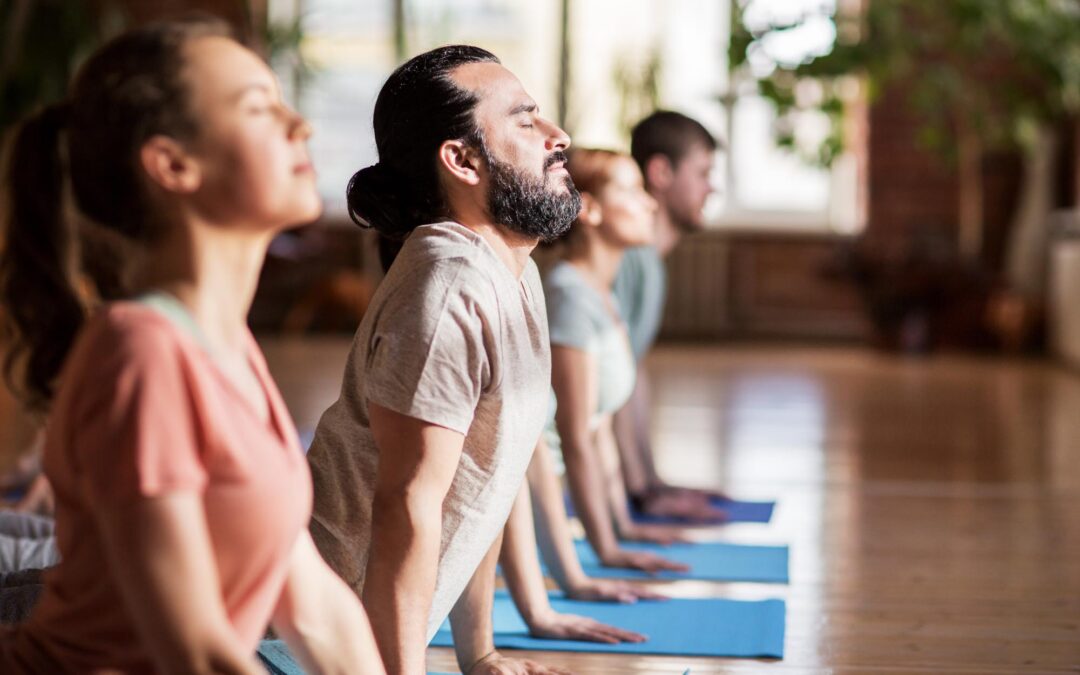
Yoga For Addiction Recovery
Why yoga belongs in addiction recovery (and what it’s not)
Yoga can be a genuinely helpful part of addiction recovery, but let’s get one thing clear right away. Yoga is not a replacement for evidence-based treatment like those offered at River Rock Treatment, which include therapy, medication (including MAT), medical detox, psychiatric care, or Twelve Step support.
What yoga can do is complement all of that by helping you rebuild a relationship with your body and nervous system, which is often where recovery gets hard in the real world. A lot of addiction involves disconnection and dysregulation. Disconnection from body signals (hunger, fatigue, anxiety, pain), from relationships (trust, boundaries, safe support), and from meaning (purpose, values, hope). Yoga works right at that mind-body interface. It helps you practice noticing what’s happening inside you, staying with discomfort in a safer way, and choosing your next step with a little more space.
Yoga can support recovery from substance use disorders and behavioral addictions, including alcohol use disorder, marijuana use, cocaine use, heroin and other opioids, and compulsive behaviors like gambling. The goals can look different depending on your stage of recovery:
- Early detox / early recovery: stabilize sleep, reduce agitation, manage cravings, and create basic nervous system safety.
- Sustained recovery: strengthen relapse prevention skills, build emotional resilience, improve mood stability, support pain management, and deepen connection to self and community.
It also helps to set realistic expectations. Yoga is not going to erase cravings forever. What it can support is your ability to ride them out. Over time, many people notice improvements in things that matter day to day, like stress tolerance, emotional processing, sleep quality, chronic pain, and the ability to pause before reacting.
One important safety note: yoga should be trauma-informed and non-punitive. You should never feel pushed to “power through” pain. And if you have health concerns like degenerative disk disease or herniated disks, it’s crucial to consult with your medical provider or treatment team before jumping into a new practice.
For those seeking comprehensive treatment options that incorporate holistic approaches like yoga into their recovery journey while still prioritizing evidence-based methods such as medical detox or psychiatric care, River Rock Treatment offers an array of services designed to cater to individual needs. Additionally, understanding the science behind these approaches can provide valuable insights into their effectiveness; for instance, this research article delves into the beneficial impact of yoga on addiction.
What the science says: yoga’s effects on the nervous system, stress, and cravings
A simple way to understand why yoga can help is to understand the nervous system in plain language.
You have two main modes that matter a lot in recovery:
- Sympathetic activation (fight or flight): mobilized energy, anxiety, irritability, hypervigilance, impulsivity.
- Parasympathetic activation (rest and digest): calming, digestion, sleep, repair, social connection.
Many people in recovery bounce between chronic hyperarousal (always “on”) and shutdown (numb, foggy, disconnected). That swing can make cravings worse, because cravings often surge when the nervous system is overwhelmed and looking for relief.
Yoga uses breath and movement to help shift your arousal state. Slow, steady movement paired with conscious breathing can increase distress tolerance and reduce impulsive, black-and-white “addictive thinking.” It gives you reps in a skill that recovery demands: staying present with discomfort without immediately escaping it.
There’s also an endocrine piece here. Stress hormones like cortisol and adrenaline are often dysregulated with active use, withdrawal, and chronic stress. Sleep disruption is common, and poor sleep alone can increase relapse risk. Consistent yoga practice has been linked in research to improvements in perceived stress, anxiety symptoms, and sleep quality for many populations, including people dealing with high stress and co-occurring mental health challenges.
You’ll also see mind-body interventions studied in hospital and academic settings, where integrative approaches are explored for stress regulation and overall well-being. Brain imaging research (like MRI studies) broadly suggests that practices involving breath, attention, and interoception can influence stress-related brain networks. The key is not to overclaim or pretend yoga “rewires your brain overnight,” but to recognize the practical takeaway: your nervous system can learn new patterns.
Here’s how that evidence often translates into outcomes people actually care about in recovery:
- Fewer or less intense cravings over time
- Better mood stability and emotional regulation
- Improved sleep
- Lower perceived stress
- Improved body awareness (interoception), so you can catch triggers earlier
How yoga for addiction supports the Twelve Steps (without conflicting with your beliefs)
Some people worry that yoga conflicts with Twelve-Step recovery or with their religion. In practice, yoga doesn’t have to conflict with anything. It can be a set of skills, not a belief system.
A lot of the Twelve Steps are about developing honesty, humility, accountability, willingness, and the ability to pause and choose a different action. Yoga supports those same capacities through experience, not willpower.
- Pause and respond vs. react: yoga trains you to notice sensation and breath before you move. That’s the same muscle you use when you feel triggered.
- Self-inquiry: You practice observing your mind and body without immediately judging it. This aligns perfectly with the concept of self-inquiry, which encourages a non-judgmental observation of oneself.
- Humility: Some days are tight, shaky, and exhausting. Yoga teaches you to meet reality instead of fighting it.
- Follow-through: Showing up, staying with a process, and doing the next right thing.
A model that bridges these worlds directly is Yoga of Twelve Step Recovery (Y12SR), created by Nikki Myers. In a typical Y12SR-style meeting, there’s time for discussion (often grounded in a Step or theme), followed by a yoga practice designed to support recovery. It’s not about flexibility or performance. It’s about using movement, breath, and stillness to help people stay sober and connected.
Yoga can also support your sponsorship and meeting life in very practical ways: you regulate your nervous system so it’s easier to pick up the phone, go to a meeting, tolerate step work feelings, and keep commitments.
If spirituality language is a concern, you can translate it. When yoga teachers say something like “universal consciousness,” you can interpret that as values, community, nature, inner wisdom, or simply the part of you that wants to live. You get to choose the frame.
Simple integration ideas that work well with Twelve Step participation:
- 2 minutes of longer-exhale breathing before or after a meeting
- A short savasana “reset” after doing emotionally heavy step work
- Journaling after practice to reflect on patterns, amends, or triggers with a calmer mind
Trauma, relapse risk, and why “gentle” often works better than intense
Trauma and addiction are often linked. Many people use substances or compulsive behaviors as nervous system coping. Not because they’re weak, but because their body learned that numbing, speeding up, or checking out was the fastest route to relief.
Yoga can help, but it has to be approached in a way that doesn’t repeat the same old pattern of forcing, overriding, or ignoring the body.
A trauma-informed approach generally includes:
- Choice-making: you’re invited, not commanded.
- Predictable cues: clear language about what’s coming next.
- Consent for touch (or no-touch): no surprise adjustments.
- Grounding and orienting: noticing the room, the mat, and points of contact.
- Titration: small doses of sensation and emotion, not flooding.
Things to watch for during yoga in recovery include dissociation (spacing out, feeling unreal), panic, shame spirals, and sudden body memories. If that happens, the goal is not to “push through.” It’s to stop, open your eyes, orient to the room, feel your feet or hands, and come back to what’s safe right now.
This is also why high-intensity yoga can be destabilizing in early recovery for some people. Intense heat, breath pumping, long holds, and “go harder” messaging can mimic the nervous system intensity that a lot of people are trying to heal from. Gentle practice builds capacity first. You can always build intensity later when your system has more stability.
Yoga can also support co-occurring relational dynamics, including codependency. When you practice noticing your body’s signals, you get better at recognizing a body-based “no,” setting boundaries, and trusting yourself again.
If you or someone you know is struggling with addiction or trauma and could benefit from professional help such as River Rock Treatment, it’s important to reach out for support.
Best yoga styles for addiction recovery (and when to use each)
Different styles can support different needs. The “best” yoga is the one that helps you regulate, reconnect, and keep showing up safely.
Vinyasa yoga
Why it can help: Vinyasa links movement to breath in a rhythmic flow. Many people experience a mood lift, improved energy, and a healthy sense of accomplishment. It can create a “natural high” through movement, focus, and endorphins, which can be a supportive replacement for substance-driven dopamine spikes.
Cautions: It can also become a place to overexert, dissociate, or chase intensity. In early recovery, it’s worth choosing beginner-friendly classes and treating them as practice, not a performance.
Kundalini yoga
Why it can help: Kundalini often emphasizes breath, mantra, and structured kriyas (set sequences). Some people find it powerful for mood and energy, and the repetitive structure can be grounding.
Cautions: Because it can be intense and activating for some nervous systems, it’s best approached carefully, especially with trauma history or panic symptoms. Teacher quality matters a lot. You may hear references to specific teachers and traditions (for example, teachers like Guruprem), but you do not need to buy into any single lineage for the practice to be helpful. Your safety and stability come first.
Restorative and Yin (when offered)
Why it can help: These styles support downregulation, sleep, and tolerance for stillness. For many people, especially in early recovery, learning to rest without reaching for something is a huge milestone. Restorative practices can also be more accessible for people with pain, injury, or low energy.
Meditation and mindfulness
Think of mindfulness as “training attention.” In the Yoga Sutras, you’ll sometimes see the phrase chitta vritti, often translated as the fluctuations of the mind. Compulsion thrives in mental loops: urges, stories, justification, shame, repeat. Meditation helps you notice the loop without becoming the loop.
How we tailor it
In clinical recovery settings, we match the style to the stage.
- Detox and early recovery: restorative, gentle movement, simple breathwork, predictable structure.
- Maintenance and long-term recovery: a blend, often including more strength and flow if it supports mood and confidence.
- Physical limitations: we adapt around back pain, disk issues, joint limitations, and energy levels.
A simple, evidence-aligned practice plan you can start this week
Consistency beats intensity in recovery. Three to five short sessions (10 to 30 minutes) usually do more than one long class that wipes you out.
Here’s a simple weekly structure:
- 2x per week: gentle movement + longer exhales (15 to 25 minutes)
- 1 to 2x per week: restorative or yin (10 to 30 minutes)
- Most days: 2 to 5 minutes of breathwork, especially around triggers
Nervous system “downshift” sequence (10 to 15 minutes)
- Orienting (30 to 60 seconds): look around the room slowly, name 3 things you see, and feel your feet on the ground.
- Gentle movement (5 to 8 minutes): cat-cow, supported child’s pose, gentle seated side bends, slow shoulder rolls.
- Longer exhales (2 to 4 minutes): inhale through the nose, exhale longer than the inhale.
- Short savasana (1 to 3 minutes): supported rest, one hand on belly, one on chest.
Craving protocol (2 to 5 minutes)
This is simple, but it’s surprisingly powerful when practiced.
- Name the urge: “This is a craving.”
- Find it in the body: throat, chest, belly, hands, jaw. Where is it living right now?
- Breathe with longer exhales: make your exhale slightly longer for 10 to 20 breaths.
- Take a values-based next step: text your sponsor, drink water, step outside for a short walk, open a recovery app, or go sit near someone safe.
The goal is not to make the craving disappear. The goal is to move from “I must obey this” to “I can stay with this and choose my next action.”
Sleep protocol (5 to 10 minutes)
- Legs-up-the-wall (or legs on a chair/bed if that’s easier)
- Diaphragmatic breathing (slow, low, gentle)
- Keep it calming. Avoid stimulating breathwork at night.
Tracking (simple and non-obsessive)
Use a tiny log for one week:
- cravings (0 to 10)
- sleep quality (0 to 10)
- mood (0 to 10)
- what you practiced (2 minutes counts)
This helps you see patterns and celebrate progress that your brain might otherwise dismiss.
Breath practices that support recovery (with clear cautions)
Breath is one of the fastest ways to change your state because it directly influences the nervous system. A simple core mechanism: a longer exhale signals safety. It supports vagal tone and can reduce stress reactivity over time.
Practice 1: Diaphragmatic breathing (belly breathing)
Best for: anxiety, early recovery, sleep support
- One hand on belly, one on chest.
- Inhale gently through the nose (feel belly expand).
- Exhale slowly through the nose or softly through pursed lips (feel belly fall).
- Start with 3 to 5 minutes.
- If counting helps, try inhale 4, exhale 6.
Practice 2: Box breathing (4-4-4-4)
Best for: acute stress, racing thoughts, before triggers
- Inhale 4
- Hold 4
- Exhale 4
- Hold 4
- Repeat for 4 rounds.
If breath retention increases anxiety, skip the holds and just do an even inhale and exhale.
Practice 3: Alternate nostril breathing (nadi shodhana)
Best for: balance, settling a busy mind (keep it gentle)
- Use a light touch.
- Inhale through one nostril, exhale through the other, then switch.
- No strain, no long holds.
- Stop if you feel dizzy or uncomfortable.
Clear cautions
Avoid aggressive breath retention or stimulating practices if you have panic symptoms, trauma activation, pregnancy, uncontrolled blood pressure, early detox symptoms, or any medical condition where your clinician has advised against it. When in doubt, keep it simple: gentle belly breathing with a longer exhale.
Movement and “detox”: what yoga really does (and doesn’t)
People sometimes talk about yoga as if it “detoxes” you. Here’s the grounded truth.
Yoga can support circulation, lymph flow, digestion, sleep quality, and stress hormone regulation. It can help you feel better in your body, which indirectly supports recovery.
But yoga does not “sweat out” drugs or replace medical detox. Withdrawal can be medically risky. If you need detox support, you deserve real medical care.
Where yoga shines is helping withdrawal discomfort indirectly:
- reducing muscle tension and restlessness
- supporting sleep, which supports mood and impulse control
- giving you a coping tool that doesn’t harm you
It also trains interoception, your ability to feel internal signals like hunger, thirst, fatigue, pain, and emotion. This is huge for relapse prevention. When you can feel what’s happening earlier, you can intervene sooner. Many relapses start with missed signals: dehydration, exhaustion, unprocessed anger, loneliness, pain, shame.
A practical, regulating sequence (not intensity-based) often includes:
- gentle twists (done slowly, pain-free)
- hip openers (supported, not forced)
- forward folds (gentle, supported, not yanked)
- restorative poses (especially for downregulation)
And yes, pair this with recovery basics: hydration, electrolytes if needed, steady meals, and clinical support when withdrawal is present.
Chronic pain, injuries, and modifications (especially back issues)
Pain is a major relapse risk factor. When pain spikes, cravings often spike too. Yoga can help reduce pain catastrophizing and improve function, but only when it’s adapted intelligently.
Common conditions we hear about include:
- degenerative disk disease
- herniated disks
- sciatica
If you have numbness, weakness, radiating symptoms, or changes in bowel or bladder function, that’s a medical conversation right away. And if a clinician has given you restrictions, follow them.
Modification principles that matter, especially for backs:
- prioritize a neutral spine
- avoid deep forward folds or twists under load
- use props (blocks, bolsters, straps, chairs)
- choose shorter holds and slower transitions
- coordinate breath with movement, no forcing
Gentle core stability (done safely) and breath-to-movement coordination often help people feel more supported and less fearful in their bodies.
Also, communicate. Tell your instructor and your treatment team what’s going on. You don’t have to “tough it out.” If anything, recovery is about telling the truth sooner.
The deeper layer: prana, meaning, and rebuilding connection
Some parts of yoga use language like prana, often translated as life energy. If that resonates, great. If it doesn’t, you can think of it as vitality, breath, motivation, and aliveness. In recovery, that matters. Many people are rebuilding the ability to feel alive without substances.
The Yoga Sutras of Patanjali offer a non-dogmatic lens that still feels relevant: suffering decreases as we learn to work with the fluctuations of the mind. In modern terms, you’re learning to relate differently to rumination, obsession, and compulsive loops.
Meditation is not about having a blank mind. It’s practice noticing urges and thoughts without fusing with them. That skill strengthens choice. It supports values-driven action, which is basically the heartbeat of long-term recovery.
There’s also the community piece. Isolation fuels addiction. Connection supports recovery. Yoga spaces and recovery communities can both serve as antidotes to isolation when they’re healthy, inclusive, and grounded.
Spirituality is optional. The measurable outcome we care about is increased connection to self, to others, and to purpose.
How we use yoga therapy in outpatient addiction recovery at River Rock Treatment
At River Rock Treatment, we’re a clinically driven outpatient substance use and mental health treatment center on the eastern shoreline of Lake Champlain in Burlington, VT. We integrate yoga as a mind-body support alongside therapy, not as a standalone fix.
When we say yoga therapy, we mean an individualized, trauma-informed, goals-based approach. It’s not about doing advanced poses. It’s about using breath, movement, and rest as skills that support your treatment plan.
Common goals we build practices around include:
- improving sleep
- reducing cravings and stress reactivity
- supporting anxiety and mood regulation
- addressing chronic pain in a safe, adapted way
- rebuilding interoception and self-trust
We also coordinate yoga-based skills with recovery planning. What you learn in a session should be usable between sessions, especially when real life hits. That might look like a two-minute downshift breath before a hard conversation, a grounding sequence after a triggering event, or a sleep protocol that replaces late-night spiraling.
Yoga and breathwork often pair well with:
- group therapy
- individual counseling
- skills training
- Twelve Step participation
- relapse prevention planning and recovery routines
If you’re new, you don’t need to be flexible, athletic, or experienced. Sessions can be beginner-friendly, chair-based, or gentle and restorative. We’ll meet your body where it is, and we’ll make sure the practice supports your recovery instead of stressing your system.
Ready to try yoga as part of your recovery plan?
If you want to explore yoga as part of a nervous-system-informed recovery plan, we’re here. Reach out to River Rock Treatment in Burlington, VT to talk about outpatient substance use and mental health treatment, what you’re dealing with right now, and how mind-body practices can fit alongside therapy, medication when appropriate, and Twelve Step or other recovery supports.
You can call, email, or schedule an intake. We’ll start with a low-pressure conversation, look at your goals and any co-occurring mental health needs, and build a plan that’s safe, practical, and evidence-informed.
FAQs (Frequently Asked Questions)
Is yoga a replacement for evidence-based addiction treatment?
No, yoga is not a replacement for evidence-based treatments such as therapy, medication (including MAT), medical detox, psychiatric care, or Twelve Step support. Instead, it complements these treatments by helping rebuild the relationship with your body and nervous system during recovery.
How does yoga support addiction recovery?
Yoga supports addiction recovery by working at the mind-body interface. It helps you notice internal experiences, stay with discomfort safely, and make mindful choices. It can aid in stabilizing sleep, reducing agitation, managing cravings in early recovery, and strengthening relapse prevention skills, emotional resilience, mood stability, pain management, and connection to self and community in sustained recovery.
How does yoga for addiction support the nervous system?
Yoga uses breath and movement to shift arousal states from chronic hyperarousal or shutdown toward balance. It increases distress tolerance, reduces impulsive addictive thinking, regulates stress hormones like cortisol and adrenaline, improves sleep quality, lowers perceived stress and anxiety symptoms, and enhances body awareness (interoception) to catch triggers earlier.
Is yoga for addiction safe for people with trauma or health concerns during recovery?
Yoga should be trauma-informed and non-punitive; you should never feel pressured to push through pain. If you have health concerns such as degenerative disk disease or herniated disks, it’s crucial to consult your medical provider or treatment team before starting yoga practice to ensure safety.
Does practicing yoga for addiction conflict with Twelve-Step programs or religious beliefs?
No, yoga does not have to conflict with Twelve-Step programs or religious beliefs. Yoga can be approached as a set of skills rather than a belief system. It aligns well with Twelve Step principles like honesty, humility, accountability, willingness, and the ability to pause and choose different actions.
Where can I find comprehensive addiction treatment that integrates yoga?
Facilities like River Rock Treatment offer comprehensive addiction treatment programs that incorporate holistic approaches like yoga alongside evidence-based methods such as medical detox and psychiatric care. These programs are designed to cater to individual needs while prioritizing effective recovery strategies.
Recent Comments