
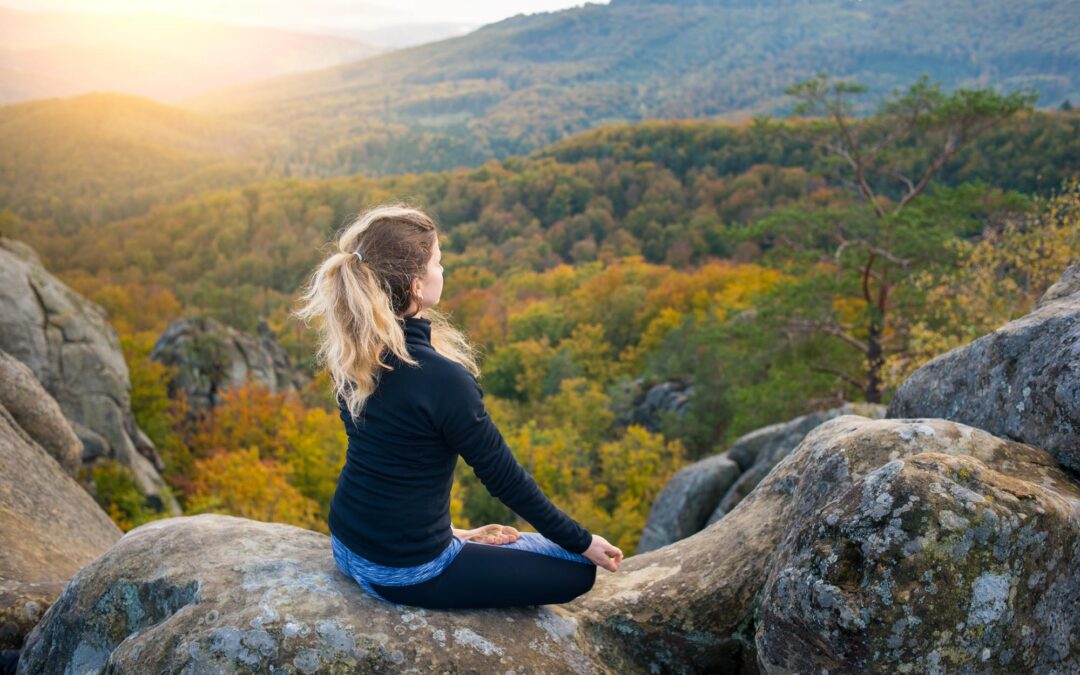
Nature Meditation vs. Indoor Meditation
What “Effective for Recovery” Actually Means (And How We Measure It)
When people ask whether nature meditation or indoor meditation is “more effective,” I always want to slow that question down a little. Because recovery is not just “not using.” It’s also the day-to-day stuff that decides whether sobriety and stability actually last.
At River Rock Treatment, we think about recovery broadly, including substance use recovery and mental health recovery (anxiety, depression, PTSD), plus how someone is functioning in real life.
So when we say “effective,” we’re usually looking at practical markers like:
- Stress reduction (how fast you come down from activation)
- Craving intensity (how strong urges feel, and how long they stick around)
- Emotional regulation (can you feel something without immediately reacting)
- Sleep quality (falling asleep, staying asleep, waking rested)
- Relapse risk (especially during conflict, loneliness, shame, or overwhelm)
- Treatment engagement (showing up, staying connected, using skills between sessions)
- Overall mindfulness (noticing what’s happening internally before it turns into an impulsive choice)
Meditation type matters because the environment changes the experience. Your surroundings affect sensory input, triggers, nervous system activation, and, honestly, whether you’ll keep doing it. And in addiction recovery, consistency often matters more than perfection.
One more important note: meditation is a skills practice. It can support evidence-based treatment, such as what we offer in our programs, but it does not replace it. If you’re working with substance use, trauma, panic, or major depression, mindfulness works best as part of a bigger plan.
And what’s “most effective” will depend on individual factors like trauma history, mobility, access to safe nature, weather, sensory sensitivity, and even how much privacy you have at home.
It’s crucial to understand that our approach at River Rock Treatment encompasses both substance use and mental health recovery.
The Science Behind Meditation, Stress, and Brain Chemistry
A simple way to understand the “why” behind meditation is to look at the stress-response loop.
When stress becomes chronic, the body stays on higher alert. Cortisol and other stress hormones run high, sleep gets disrupted, mood becomes more reactive, and impulse control gets weaker. That’s a rough combo for anyone, and it can be especially hard in recovery because stress is a common relapse driver.
Mindfulness practices can help by training the nervous system to return to baseline more easily. Over time, meditation is associated with:
- Lower threat reactivity (less hair-trigger fight-or-flight)
- Improved emotion regulation (more pause between feeling and doing)
- Better attention control (less getting swept away by thoughts)
- More tolerance for discomfort (which is a huge part of craving management)
On the brain chemistry side, we can keep expectations realistic while still acknowledging what’s happening. Addiction and chronic stress both affect reward and mood pathways. Mindfulness may support healthier regulation of systems involving dopamine (reward/motivation), serotonin (mood), and the broader stress network that keeps the body in a threat state.
That matters because cravings often spike when someone is stressed, ashamed, lonely, tired, or emotionally flooded. If you can lower arousal and stabilize your mood even a little, urges tend to become more workable. You may still feel them, but they’re less likely to hijack you.
This lines up with how many clinicians talk about mindfulness in treatment settings, including perspectives consistent with Board Certified Family Physician Dr. Mitchell Naficy, who has emphasized that mindfulness is not about forcing calm. It’s about building steadier self-awareness and better coping, which supports healthier decisions over time.
Nature Meditation: What It Is (And Why It Can Feel So Different)
Nature meditation is mindfulness practiced outdoors, or with natural elements, using attention anchors like:
- Breath and body sensations
- Birds, wind, water, leaves
- Light and shadows
- Temperature on the skin
- Gentle movement like walking
You’ll also hear related terms like nature therapy, green therapy, or ecotherapy. These overlap with mindfulness in nature, even if the “meditation” part is less formal. The common thread is using the natural world to support regulation, reflection, and connection.
One reason nature meditation can feel easier is something psychologists often describe as soft fascination. Nature tends to hold attention gently. You don’t have to force focus as hard because there’s enough movement and sensory variety to keep your mind from spiraling, but not so much that it overwhelms you.
For recovery, that can be powerful. Nature can:
- Interrupt shame spirals by widening perspective
- Reduce rumination because attention has somewhere healthier to go
- Create a felt sense of space from triggers
- Support identity change by building new routines that actually feel good
And yes, we’re lucky in Burlington. Being near Lake Champlain gives us access to water, shoreline, and trail-based options that can fit really well into treatment, when it’s clinically appropriate and safe for the person.
Indoor Meditation: What It Is (And Why It’s Often the Most Repeatable)
Indoor meditation is what most people picture: seated mindfulness, guided breathing, body scan, or mantra practice in a quiet, controlled space.
The big advantage is control:
- Predictable lighting and temperature
- More privacy
- Fewer sensory variables
- Less chance of running into unexpected stressors
That predictability can be especially helpful early in sobriety, when someone’s nervous system is more reactive, and their coping capacity is still rebuilding. It can also be a better fit for PTSD symptoms or hypervigilance, when “open space” outside can feel unsafe.
Indoor practice is also more repeatable. You can do it:
- In winter
- At night
- During a quick break at work
- In the exact moment stress hits
Common barriers indoors are real, though: boredom, restlessness, intrusive thoughts, and that uncomfortable “I’m doing it wrong” feeling. In early recovery, sitting still can sometimes intensify what you’ve been trying not to feel.
That’s why structure helps. Indoor meditation can be a foundational “skills lab” where you learn the basics in a contained environment, then bring those skills into real-world triggers.
Nature Meditation vs. Indoor Meditation: Key Differences That Matter in Recovery
Here’s the honest comparison we tend to make clinically:
Regulation vs. stimulation
- Indoor meditation often lowers sensory load. That can help you stabilize when you’re already overwhelmed.
- Nature meditation provides therapeutic sensory input (sounds, light, movement) that can downshift stress without requiring as much effortful focus.
Trigger exposure
- Indoor practice offers containment when you’re dysregulated.
- Outdoor practice can become a gentle, planned exposure to discomfort (wind, uncertainty, other people nearby), which can be helpful when you’re ready for it.
Attention anchors
- Indoor often relies heavily on breath and body, which can be challenging but deeply strengthening.
- Nature offers multiple anchors, which can make presence feel more accessible, especially for anxious or ruminative minds.
Social connection
- Outdoor group walking can create a connection without the intensity of face-to-face sitting, which helps some people feel safer.
- Indoor meditation may feel more private and protected, which can be better for social anxiety or trauma-related vigilance.
Accessibility
- Indoor is always available.
- Nature depends on weather, transportation, physical ability, and whether the outdoor space is actually safe and supportive for recovery.
Nature Meditation Practices for Stress and Substance Abuse (Practical Options)
If you want to experiment with nature-based mindfulness, here are a few approaches that tend to work well in recovery. Keep it simple. The goal is not to have a perfect experience. The goal is to practice returning.
Walking meditation (10 to 20 minutes)
This is one of the best entry points if sitting still ramps you up.
Try this:
- Walk slower than usual.
- Feel the soles of your feet.
- Quietly note: “left, right” or “lifting, placing.”
- When your mind drifts, return to feet, then breath.
If an urge shows up, don’t fight it. Notice it like a weather pattern: “tightness in chest,” “heat in face,” “restlessness in hands.” Then back to feet.
Guided breathing outdoors (box breathing or paced exhale)
A simple approach:
- Inhale for 4
- Hold for 4
- Exhale for 4
- Hold for 4
Or try a paced exhale:
- Inhale normally
- Exhale longer than you inhale (for example, inhale 4, exhale 6)
Let the outdoor sounds be part of the practice. Wind, birds, and water can all become anchors.
Gardening therapy
Gardening is underrated in recovery because it hits multiple targets at once:
- Tactile grounding
- Routine building
- Nurturing behavior (which supports self-worth)
- A visible sense of progress over time
You’re also practicing patience and non-control, which is basically meditation in disguise.
Camping or wilderness retreats (when appropriate)
These can be meaningful, but they should be structured, safety-planned, and matched carefully to the person. For some, “getting away” is regulating. For others, it can feel destabilizing or isolating.
If this is something you’re curious about, we recommend doing it with clear supports in place and clinical oversight when needed.
Adventure therapy (challenge-by-choice)
This can build resilience and self-efficacy, but only when it’s truly “challenge-by-choice.” The right amount of challenge helps you practice distress tolerance. Too much can trigger shutdown, panic, or dissociation.
When Nature Meditation Is Usually More Effective (And Who It Helps Most)
Nature meditation often shines for people who are stuck in high activation or shutdown and need a faster nervous system downshift.
It’s often especially helpful for:
- High stress, high cortisol patterns: nature can help the body settle more quickly
- Depression and low motivation: movement, sunlight, and novelty support behavioral activation
- Shame and isolation: outdoor group options can rebuild connection with less pressure
- People who struggle with sitting still: walking meditation, hiking, or outdoor yoga can be a better entry point
- Clients building a new sober lifestyle: nature-based routines replace old patterns and support identity change
If part of your recovery plan is “I need something healthy to do when cravings hit,” nature can become that thing, as long as it’s safe and doable.
When Indoor Meditation Is Usually More Effective (And Who It Helps Most)
Indoor meditation is often the better fit when stability, predictability, and safety are the priority.
It’s usually more effective for:
- Early sobriety and high reactivity: fewer variables means less overwhelm
- PTSD symptoms or hypervigilance: a controlled setting can feel safer than open environments
- Limited access to safe outdoor spaces or harsh weather: indoor practice keeps consistency
- Mobility limitations or chronic pain flares: seated or lying practices can be adapted
- People who benefit from routine and structure: scheduled practice supports habit formation
If you’re in a phase where your nervous system is easily triggered, indoor meditation can be your “home base.” You can always expand outward later.
Common Mistakes That Make Either Type Less Helpful (And How to Fix Them)
A lot of people try meditation, feel worse, and assume it “doesn’t work for me.” Usually, it’s not that meditation can’t help. It’s that the approach needs adjusting.
Mistake: Using meditation to force feelings away
Fix: Reframe meditation as noticing, naming, and allowing. That’s emotional regulation. If you’re trying to meditate your anxiety into disappearing, you’ll end up fighting your own nervous system.
Mistake: Going too long too soon
Fix: Start with 3 to 5 minutes. Build tolerance gradually. This matters a lot in early recovery, especially if cravings or trauma symptoms spike when you slow down.
Mistake: Choosing environments that aren’t recovery-safe
Fix: Avoid high-trigger locations. Plan routes. If being near certain people, streets, or stores increases risk, that’s not “exposure therapy.” That’s unnecessary danger. Pick a setting that supports your goals.
Mistake: Skipping grounding tools
Fix: Add simple anchors:
- Feel feet on the ground
- Press fingertips together
- Name 5 things you see
- Slow the exhale
These tools are especially helpful if you dissociate, panic, or get pulled into intrusive thoughts.
Mistake: Not integrating meditation into a broader plan
Fix: Pair meditation with therapy goals, sleep hygiene, nutrition, support meetings, and relapse-prevention planning. Meditation supports the plan. It can’t be the whole plan.
How We Integrate Nature and Mindfulness at River Rock Treatment (Lake Champlain-Based, Clinically Driven)
At River Rock Treatment, we’re a clinically driven outpatient substance use and mental health treatment center on the eastern shoreline of Lake Champlain in Burlington, VT. That setting gives us options, but we stay grounded in what actually supports recovery, not what just sounds nice.
We use mindfulness as a practical skill set that supports treatment plans by helping clients build:
- Coping skills for stress and cravings
- Distress tolerance for uncomfortable emotions
- More flexible responses to triggers
- Values-based living (choosing what matters even when it’s hard)
When it’s appropriate, nature can be part of that. That might look like shoreline grounding, mindful walks, outdoor breathwork, or movement-based mindfulness. We keep it trauma-informed, safety-planned, and matched to the person’s clinical needs.
And we also rely on indoor options year-round because consistency is a big deal in recovery. Guided breathing, body scans, seated mindfulness, and skills groups can reinforce practice and help it stick when life gets messy.
Most importantly, we personalize. If nature feels regulating for one person and activating for another, we listen to that. Effective treatment is not one-size-fits-all.
A Simple 7-Day Plan: Combine Nature + Indoor Meditation for Stronger Results
If you’re not sure where to start, this blended approach tends to work better than debating “nature vs. indoor” like it’s a contest.
Day 1 to 2
- 5 minutes indoor guided breathing
- 10-minute mindful walk on a low-stimulation route
Day 3
- 5 minutes indoor guided breathing
- 10-minute mindful walk on a low-stimulation route
- Add one extra cue on the walk: when you notice stress or craving, label it as sensations (tight, hot, restless), then return to feet and breath
Day 4
- 7 minutes indoor body scan (short version)
- 10-minute walk, focusing on sounds as your anchor (birds, wind, footsteps)
Day 5
- 5 minutes indoor breathing right after waking up
- 12 to 15-minute walk later in the day, especially if afternoons are a trigger time
Day 6
- Longer hike or extended walk if appropriate (20 to 40 minutes)
- Pause every 5 to 10 minutes and ask, “What’s my body doing right now?”
- Bring a grounding script for anxiety spikes: feet, breath, 5 things you see
Day 7: Reflective Practice (10 minutes, indoors or outdoors)
- What reduced stress the most?
- What increased cravings?
- What felt sustainable?
- What time of day worked best?
Tailor based on diagnosis and reality. Anxiety, depression, PTSD, your schedule, weather, and safety all matter. The best plan is the one you will actually do, especially on your hard days.
Get a Recovery Plan That Fits Your Nervous System (Not Just Your Willpower)
If you’re struggling with substance use, anxiety, depression, PTSD symptoms, or you’re simply exhausted from trying to white-knuckle your way through cravings and stress, we’re here.
At River Rock Treatment, we’ll help you build a personalized outpatient recovery plan that fits your nervous system, your life, and your goals. That can include mindfulness skills and, when appropriate, nature-based options around Lake Champlain that support real, steady change.
Don’t hesitate to reach out. You can call or email us, or book an assessment/consultation with River Rock Treatment today. Let’s talk about what support could look like for you this week.
FAQs (Frequently Asked Questions)
What does ‘effective for recovery’ mean in the context of meditation and treatment?
At River Rock Treatment, ‘effective for recovery’ means more than just abstaining from substance use. It encompasses practical markers such as stress reduction, craving intensity, emotional regulation, sleep quality, relapse risk, treatment engagement, and overall mindfulness. Effectiveness is measured by how well these factors support lasting sobriety and mental health stability.
How does meditation influence brain chemistry and stress in addiction recovery?
Meditation helps regulate the stress-response loop by lowering chronic stress hormones like cortisol, improving emotion regulation, attention control, and tolerance for discomfort. It supports healthier dopamine and serotonin pathways involved in reward and mood, which can reduce cravings triggered by stress, shame, or emotional overwhelm, making urges more manageable during recovery.
What is nature meditation, and why might it feel different from indoor meditation?
Nature meditation involves practicing mindfulness outdoors or with natural elements using anchors like breath, birdsong, wind, light, and gentle movement. It often feels easier due to ‘soft fascination,’ where natural stimuli gently hold attention without overwhelming it. This can interrupt negative thought patterns, reduce rumination, create space from triggers, and support identity change in recovery.
Why is consistency important in meditation practice during recovery?
In addiction recovery, consistency often matters more than perfection because regular practice helps train the nervous system to return to baseline more easily. Consistent meditation supports ongoing stress reduction, emotional regulation, and mindfulness skills that contribute to lasting sobriety and mental health stability.
Can meditation replace evidence-based treatments for substance use or mental health disorders?
No. Meditation is a skills practice that supports but does not replace evidence-based treatments offered at River Rock Treatment. For conditions like substance use disorders, trauma, panic, or major depression, mindfulness works best as part of a comprehensive treatment plan tailored to individual needs.
How do individual factors affect the effectiveness of meditation types in recovery?
Effectiveness depends on factors like trauma history, mobility, access to safe nature environments, weather conditions, sensory sensitivities, and privacy at home. These influence whether nature or indoor meditation is more suitable and sustainable for each person during their recovery journey.
Recent Comments